English ![]()

No.7 Wolong Middle Road, Wolong Economic Park, Zhifu District, Yantai City, Shandong Province

Views: 0 Author: Site Editor Publish Time: 2026-10-07 Origin: Site
Selecting the incorrect needle specifications leads to stretched stitches, bunched projects, or severe ergonomic strain. This derails a project before you even cast on. Knitters and textile producers face a fragmented market of needle gauges, cable lengths, and material types. Without a systematic approach to matching project circumference and yarn weight to the correct tool, buyers risk wasting capital on incompatible equipment. This guide provides an evidence-based framework for evaluating and selecting the optimal circular knitting needles. We analyze standard sizing matrices, length applications, and the structural trade-offs of different needle systems. You will learn exactly how to match your yarn to the right tool to ensure structural integrity and mechanical efficiency.
Length dictates capacity: The cable length must be slightly shorter than the total circumference of the project to prevent stitch stretching, unless utilizing the Magic Loop method.
Ergonomic superiority: Beyond tubular knitting, circular needles are the optimal choice for large flat projects, as the flexible cable shifts the fabric's weight off the wrists and into the lap.
Gauge standardization: US Sizes 7 to 9 (4.5mm–5.5mm) remain the most statistically common starting point for worsted-weight projects and foundational toolkits.
System scalability: Interchangeable needle sets offer higher long-term ROI for frequent users, though fixed circulars present lower upfront risk and eliminate mechanical joint failures.
Industrial vs. Hand-craft distinctions: Commercial production requires specific hardware (e.g., the 350A1450 Circular Knitting Machine Needle), which operates on entirely different technical parameters than consumer hand-knitting tools.
Establishing a reliable selection matrix requires analyzing three primary variables. These variables dictate project success and mechanical efficiency. You must evaluate needle tip diameter, cable length capacity, and material friction. Gauge determines stitch size and fabric density. Capacity dictates how many stitches the system can hold without distortion. Friction controls the speed of stitch transfer and overall yarn management. When you get these three elements right, the fabric flows naturally.
Technical requirements dictate that a circular needle's total length must be shorter than the project's resting circumference. Measure the needle from tip to tip. This measurement should be 2 to 4 inches shorter than the intended fabric width. If the cable exceeds the project circumference, stitches stretch across the excess length. This stretching distorts the gauge and makes joining in the round physically impossible without severe tension issues. Conversely, if the cable is excessively short, stitches crowd the needle. Crowding causes dropped stitches and obscures pattern visibility.
Project Type | Average Circumference | Recommended Needle Length |
|---|---|---|
Adult Hat | 20 to 22 inches | 16 inches |
Child Sweater Body | 26 to 28 inches | 24 inches |
Adult Sweater Body | 34 to 40+ inches | 29 to 32 inches |
Large Afghan or Blanket | 50 to 60+ inches | 40 to 47 inches |
Proper needle selection directly mitigates hand and wrist fatigue. Straight needles act as levers. As a flat-knit project grows, the fabric's weight hangs off the ends of straight needles, multiplying the torque applied to your wrists. Circular needles eliminate this mechanical disadvantage. The flexible cable allows the bulk of the fabric to rest in your lap. This load transfer makes circular systems vastly superior for heavy, flat-knit projects like afghans and oversized sweaters. You can knit for hours without the joint pain associated with straight needles.
The transition point between the rigid needle tip and the flexible cable is the most vulnerable point of the tool. Matching the correct cable length prevents the laddering effect. Laddering occurs when stretched stitches pull apart at the joins of poorly sized needles. A smooth, well-machined join ensures stitches glide seamlessly. Rough joins snag delicate yarn fibers, slowing production and fraying the material. Always inspect the join before casting on a large project.
Beyond length, the physical behavior of the cable dictates project success. Cable memory refers to the cord's tendency to coil back into its packaged shape. High-memory cables fight against your hands, twisting the fabric and causing severe wrist strain. Low-memory cables drape naturally. Nylon cables often require relaxing in warm water before use to release their memory. Modern steel-core cables coated in nylon offer zero memory, providing immediate flexibility straight out of the package. Selecting a zero-memory cable drastically improves the knitting experience, especially when working with lightweight yarns that cannot force a stiff cable to uncoil.
Understanding the application spectrum of different Circular Knitting Needle Lengths ensures proper capacity planning. Each length category serves specific structural requirements for both tubular and flat construction.
These short systems handle small circumference tubular knitting. They excel at producing hats, collars, and sweater sleeves. They also perform highly effectively for small flat projects like washcloths or dishcloths, where standard straight needles feel unwieldy.
The primary implementation risk involves ergonomics. A 16-inch total length requires exceptionally short needle tips, usually around 3.5 inches long. Standard tips measure 4.5 to 5 inches. The truncated length forces users to adopt a fingertip pinch grip rather than a full-hand grasp. This grip modification can cause rapid hand cramping for users with larger hands or those working with high-tension yarns. If you experience hand fatigue, switch to a longer cable using the Magic Loop method.
These represent the most versatile intermediate lengths in a standard toolkit. They handle the bulk of standard garment construction.
Ideal for flat knitting applications including cardigans and wide scarves.
Perfect for medium tubular projects like child-sized sweaters and adult sweater bodies.
Highly effective for knitting front bands on cardigans where you need to pick up hundreds of stitches.
Trade-offs include being too long for standard adult hats and too short for heavy, wide afghans.
Longer cables accommodate massive stitch counts and specialized techniques. They are the standard requirement for heavy blankets, shawls, and expansive lacework.
These lengths are mandatory for utilizing the Magic Loop method. Magic Loop allows knitters to produce small-circumference items like socks or sleeves on a highly flexible, oversized cable. The excess cable loops out between the stitches, eliminating the need for double-pointed needles.
Gauge-specific pairings often dictate length selection. The 40-inch lengths prove exceptionally popular in smaller gauges, specifically US Sizes 2, 3, 4, and 5. These pairings support expansive lace shawls or the technique of knitting two socks simultaneously.
Capacity planning requires strict adherence to physical limits. Projects measuring 50 inches wide or larger demand specific hardware. A 40-inch to 47-inch cable is required to comfortably accommodate the stitch volume. Forcing a 50-inch wide blanket onto a 29-inch cable guarantees severe stitch crowding and structural distortion.
When you select the wrong length, the fabric immediately signals the error. If you cast 100 stitches of bulky yarn onto a 16-inch cable, the stitches will compress into a solid, unmovable mass. You will physically struggle to slide the stitches up to the needle tip. This friction slows your production rate to a crawl and damages the yarn plies. Conversely, casting 50 stitches of fingering weight yarn onto a 32-inch cable stretches the work so tightly that the yarn may snap. The stitches will look distorted, and the resulting fabric will lose its natural elasticity. Always measure your resting gauge swatch to calculate the exact circumference before committing to a cable length.
Selecting the correct gauge ensures the fabric achieves the desired drape, density, and structural stability. Circular Knitting Needle Sizes categorize into three primary tiers based on yarn weight compatibility and mechanical stress.
Micro-gauges handle fingering weight yarns, sock construction, and dense lace patterns. These applications require high tension and precise stitch manipulation.
The primary evaluation dimension is structural integrity. Wooden variants carry a high risk of snapping under standard knitting tension. Metal needles are strongly recommended for these sizes. Stainless steel or carbon fiber provides the necessary tensile strength to prevent mechanical failure during tight stitch execution. When working with micro-gauges, keep your grip relaxed to avoid bending the tips.
Mid-range sizes pair optimally with DK-weight yarns. They produce lightweight garments, standard accessories, and versatile transitional pieces. These sizes offer a balance between fine detail and reasonable production speed. They tolerate both wooden and metal materials well, allowing users to select based on friction preference rather than pure structural necessity.
These sizes represent the universal starting point for general-purpose knitting. They pair perfectly with worsted-weight yarns.
They provide excellent stitch visibility, allowing users to easily identify and correct errors.
They offer an optimal balance of project speed and fabric density.
They reduce hand strain by requiring less precision than micro-gauges.
They serve as the foundational sizes for building a comprehensive toolset.
Yarn Weight Category | Recommended US Size | Recommended Metric Size | Typical Application |
|---|---|---|---|
Fingering / Sock | 1 to 3 | 2.25mm to 3.25mm | Socks, lightweight shawls |
Sport / DK | 4 to 6 | 3.5mm to 4.0mm | Light sweaters, baby garments |
Worsted / Aran | 7 to 9 | 4.5mm to 5.5mm | Winter hats, standard sweaters |
Bulky / Chunky | 10 to 11 | 6.0mm to 8.0mm | Heavy scarves, quick blankets |
Your chosen needle size does not exist in a vacuum. The material of the needle interacts with the yarn to alter your final gauge. A US Size 8 wooden needle grips the yarn, often causing knitters to pull their stitches tighter to move them along the shaft. This results in a denser fabric. The exact same knitter using a US Size 8 stainless steel needle will experience less drag, allowing the stitches to form more loosely. This material-induced gauge shift can alter a sweater's final circumference by several inches. Always knit your gauge swatch using the exact needle material and size you intend to use for the final project.
Procurement strategies divide between fixed units and modular systems. Each approach presents distinct mechanical advantages and investment profiles.
Fixed systems permanently attach the needle tip to the cable. This design offers a seamless transition, eliminating the risk of the cable detaching during heavy projects. They present a lower barrier to entry for single-project buyers.
Advanced utility makes fixed needles highly cost-effective for specific technical requirements. Knitters frequently require multiple needles of the exact same size simultaneously. Holding live stitches, executing three-needle bind-offs, or managing complex modular knitting demands redundant hardware. Purchasing multiple fixed needles is more efficient than buying multiple interchangeable sets.
The primary drawback is poor scalability. Users must purchase a completely new unit for every unique size and length combination required by future patterns. This leads to cluttered storage and higher cumulative costs over years of knitting.
Interchangeable systems provide high modularity. A standard set includes multiple tip sizes and varying cable lengths. Connecting different components yields dozens of unique combinations. This drastically reduces long-term procurement costs and storage requirements.
Implementation risks center on the mechanical join. The threaded connection between tip and cable can unscrew during use. If the join loosens, yarn snags in the gap, or the project detaches entirely. Mitigation requires strictly utilizing the provided tightening keys. Buyers must select brands featuring smooth, precisely machined joins to ensure consistent tension.
Interchangeable systems require active maintenance to preserve their functionality. The threaded joints accumulate microscopic debris, yarn fibers, and hand oils over time. This buildup prevents the cable from seating fully into the needle tip, creating a rough transition that snags yarn. Clean the threads monthly using a dry microfiber cloth. Never use liquid lubricants, as they will transfer to your yarn and ruin the project. When tightening the join, always use the provided metal key. Insert the key into the designated hole on the cable and use it as a lever to torque the connection tight. Hand-tightening is never sufficient and guarantees the needle will unscrew during a heavy project.
Feature | Fixed Circular Needles | Interchangeable Needle Sets |
|---|---|---|
Joint Integrity | Permanent, seamless transition. Zero risk of detachment. | Mechanical thread. Requires tightening key. Risk of loosening. |
Scalability | Low. Requires individual purchase per size/length. | High. Dozens of combinations from a single kit. |
Upfront Investment | Low per unit. Ideal for testing specific materials. | High initial outlay. Superior long-term value. |
Best Application | Single projects, holding live stitches, heavy load bearing. | Frequent knitters, diverse pattern requirements, travel. |
Needle material directly impacts friction coefficients, project speed, and hand fatigue. Matching the material to the yarn fiber is a critical step in project planning.
Metal needles offer low friction and high speed. They feature slick surfaces that allow stitches to glide effortlessly. They perform best with sticky yarns like rustic wool or unmercerized cotton. Tight knitters benefit greatly from metal, as the low friction prevents stitch binding.
The primary risk involves control. The slippery surface may cause dropped stitches, especially for beginners managing complex patterns. If your stitches constantly slide off the tips, switch to a material with higher drag.
Wooden needles provide high friction and maximum control. The surface grips the yarn, preventing stitches from sliding off the tips unexpectedly. They pair perfectly with slippery yarns like silk, alpaca, or bamboo blends. They are highly recommended for beginners developing their tension control.
Risks include material degradation. Wood is prone to wear, splintering, or snapping at smaller gauges. It also slows down production speed for experienced users. Over time, the oils from your hands will naturally condition wooden needles, making them slightly smoother.
Carbon fiber delivers high tensile strength with moderate grip. These composite materials often feature metal tips for precise stitch manipulation, combined with a carbon shaft for slight friction. They command premium pricing but offer the absolute best structural durability for micro-gauges.
The physical weight of the needle material impacts long-term knitting comfort. Solid brass or heavy steel needles add unnecessary weight to your hands. While the cable supports the fabric, your fingers still bear the weight of the needle tips. For knitters with arthritis or repetitive strain injuries, lightweight materials like hollow brass, aluminum, or bamboo are mandatory. Hollow metal needles provide the slick surface required for speed without the dense mass of solid steel. Evaluate the weight of the tips before purchasing a full interchangeable set, as heavy tips can cause the cable to swing uncomfortably during rapid knitting.
Assess your yarn fiber. Slippery yarns need wood; sticky yarns need metal.
Evaluate your personal knitting tension. Tight knitters should avoid high-friction materials.
Consider the needle gauge. Avoid wood for sizes under US 3 to prevent snapping.
Test a single fixed needle in a new material before buying a full set.
Scope clarification is necessary when discussing textile production. Consumer hand-knitting tools operate on fundamentally different principles than commercial textile manufacturing hardware.
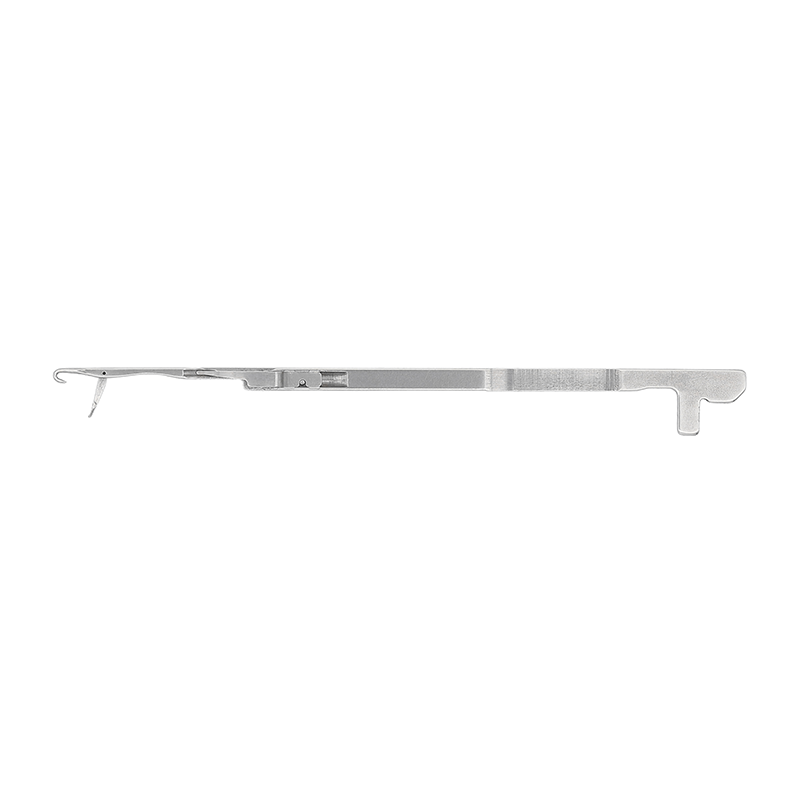
Industrial production relies on automated, high-speed machinery. These machines utilize hundreds or thousands of individual needles arranged in a rotating cylinder. The 350A1450 Circular Knitting Machine Needle is a specific industrial component. It functions as a latch needle, designed for rapid stitch formation in large-diameter circular knitting machines.
Unlike hand-knitting tools, latch needles feature a hook, a pivoting latch, a stem, and a butt. The butt engages with the machine's cam system, driving the needle vertically to catch and pull yarn through the previous loop. The latch automatically closes to secure the stitch.
Evaluating industrial components requires strict adherence to machine specifications. Operators sourcing replacement parts must verify gauge compatibility, cylinder size constraints, and exact hook dimensions. This procurement process relies on precise engineering tolerances. A mismatch in butt height or latch length causes catastrophic machine jams and fabric defects. This contrasts sharply with hand-knitting tool selection, which prioritizes ergonomics and user preference over rigid mechanical tolerances.
Audit your most frequently knit patterns to identify your dominant yarn weight and typical project circumference.
Test a single fixed circular needle in your preferred material before committing capital to a comprehensive interchangeable system.
Knit a gauge swatch in the round to verify that your selected needle diameter produces the correct fabric density.
Select cable lengths strictly based on the resting width of your project, maintaining a 2 to 4-inch deficit to prevent stretching.
A: A project measuring 50 inches wide requires a circular needle length of 40 to 47 inches. The cable must be slightly shorter than the total fabric width to accommodate the stitches comfortably without stretching the gauge or causing excessive crowding along the flexible cord.
A: Yes, but only if you utilize the Magic Loop method. This technique allows you to knit small circumferences on a long cable by pulling the excess cord out between the stitches. Without this method, a cable longer than the project will stretch and distort the fabric.
A: US Sizes 7, 8, and 9 (4.5mm to 5.5mm) are the most common starting sizes. They pair perfectly with worsted-weight yarns, offering excellent stitch visibility, comfortable ergonomics, and a balance of project speed and manageable fabric density.
A: Circular needle lengths are measured from the very tip of one rigid needle, across the entire flexible cable, to the very tip of the opposite needle. The measurement represents the total functional length of the system, not just the length of the flexible cord.
A: Fixed circulars have the needle tips permanently attached to the cable, offering a seamless, secure join. Interchangeable needles feature detachable tips and cables that screw together, allowing users to create dozens of custom size and length combinations from a single modular kit.
A: The Magic Loop method is necessary when knitting small-circumference tubular items, such as socks, mittens, or sweater sleeves, using a circular needle that is significantly longer than the project's circumference. It eliminates the need to switch to double-pointed needles.
A: Knitters need duplicate sizes for advanced techniques. Common applications include holding live stitches for a collar, executing a three-needle bind-off to join shoulder seams, or managing complex modular knitting patterns where multiple fabric sections must remain active simultaneously.