
English ![]()

No.7 Wolong Middle Road, Wolong Economic Park, Zhifu District, Yantai City, Shandong Province

Views: 0 Author: Site Editor Publish Time: 2026-03-17 Origin: Site
In flat knitting machines, solenoids play a vital role in controlling the movement of the needles. These electromagnetic devices ensure that the knitting machine functions precisely and efficiently by activating and deactivating needles based on the programmed pattern. The accuracy of needle selection is essential for producing high-quality fabric with accurate designs. Without proper solenoid function, flat knitting machines could experience defects in fabric patterns, low production efficiency, and machine downtime.
In this article, we will explore how solenoids control needle selection in flat knitting machines. We’ll discuss the working principle of solenoids, their role in needle movement, and how they ensure the production of high-quality fabrics. Additionally, we’ll cover common issues in solenoid-controlled needle selection and ways to optimize their performance.
A solenoid is an electromagnetic coil that, when energized, generates a magnetic field, causing a mechanical motion. In flat knitting machines, solenoids are used to control the movement of needles by activating or deactivating them based on the machine's program. The solenoid’s ability to respond quickly and accurately is what allows flat knitting machines to create complex patterns at high speeds.
In simple terms, solenoids work by converting electrical energy into mechanical motion. When current flows through the solenoid's coil, it creates a magnetic field that attracts or repels a metal plunger or armature. This movement activates the mechanism controlling the needle selection system. Solenoids in flat knitting machines must be highly responsive, as they directly influence the timing and placement of needles during the knitting process.
Solenoids are critical for ensuring that the needles move at the right time and in the correct position. The movement of the needles controls the fabric pattern, ensuring that each stitch is made accurately. Without solenoids, the entire process would be far slower and prone to errors, leading to significant inefficiencies and lower-quality fabrics.
Solenoids activate or deactivate needles at specific points in the knitting cycle by generating a magnetic field when current flows through the coil. Depending on the current's direction, the solenoid either pulls or pushes a metal plunger, moving the needle into the working or resting position. When activated, the solenoid triggers the mechanism that selects the correct needles for a stitch. Once the stitch is made, the solenoid deactivates, returning the needle to its resting position, ready for the next cycle.
The accuracy of the fabric pattern depends on how precisely the solenoids control needle movement. In computerized flat knitting machines, solenoids must respond quickly and accurately to the programmed pattern. Any faults or delays in solenoid response can lead to incorrect needle selection, causing misaligned stitches and affecting fabric quality. High-speed knitting machines require solenoids capable of fast and precise switching to maintain consistent pattern accuracy and avoid design errors.
There are different needle selection mechanisms in flat knitting machines, with solenoids integrated into most of them. Some machines use mechanical systems that are manually adjusted, while others use electronically controlled solenoids.
Jacquard Needle Selection: Solenoids select needles based on pre-programmed patterns stored in the machine’s control system, controlling each needle individually.
Electromagnetic Needle Selection: Electromagnetic solenoids control needle selection using machine control signals, activating the needles by moving the mechanism.
Mechanical Needle Selection: Some machines use mechanical systems with solenoids assisting in needle positioning, while mechanical cams and levers govern needle movement.
Different flat knitting machine brands, like Stoll, Shima Seiki, and Steiger, use solenoids in slightly different ways, though the core principle of needle activation remains the same. The differences lie in the solenoid type and control system.
Stoll Machines: These use high-precision solenoids in jacquard systems for rapid needle selection.
Shima Seiki Machines: Known for speed, Shima Seiki machines rely on solenoids working with computerized systems for seamless needle selection.
Steiger Machines: These machines use solenoids with electromagnetic needle selectors, focusing on durability and high-speed performance.
Solenoids use electromagnetic force to move the needles, pulling or pushing a plunger to engage the needle mechanism. This must occur quickly and accurately to maintain high production speeds and precise patterns. Slow solenoids can delay needle movement, resulting in errors, so solenoids need to be both fast and responsive.
In computerized systems, solenoids are controlled by the machine’s computer, ensuring precise stitch placement. In mechanical systems, solenoids assist in needle movement through simpler control mechanisms, relying on cams and levers for basic needle selection.
The electromagnetic coil is the core component of the solenoid. When electrical current passes through the coil, it generates a magnetic field. This field either attracts or repels a metal plunger or armature, causing mechanical movement. The solenoid’s design ensures that this movement is transferred to the needle selection mechanism, activating or deactivating the needles as required by the program.
The strength and speed of the solenoid’s magnetic field depend on the current supplied to the coil and the quality of the solenoid’s materials. Higher-quality materials, such as copper coils and strong magnets, lead to more efficient solenoids that can perform faster and with greater precision.
In many flat knitting machines, solenoids are paired with spring mechanisms that help return the needles to their resting position once they have completed their task. The solenoid moves the needle forward, and the spring mechanism pulls it back after the stitch is made. This combination of solenoid and spring ensures smooth and continuous operation of the needle selection system, preventing unnecessary delays.
The solenoid’s operation is governed by a control system that sends electrical signals to the solenoid based on the machine’s programming. In computerized systems, the machine’s central processor controls when and how each solenoid is activated to select the correct needles. The control system ensures that the solenoids work in harmony, activating the right needle at the right time to create the intended pattern.
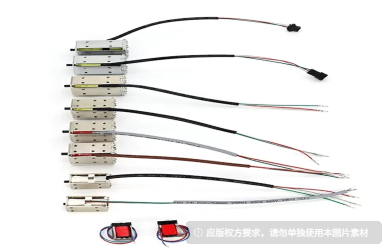
One of the most important factors affecting solenoid performance is the voltage supplied to the solenoid. If the voltage is too high or too low, the solenoid may not operate properly, resulting in inaccurate needle selection. Ensuring a stable and correct power supply is crucial for the solenoid’s functionality.
Solenoids in flat knitting machines must have quick response times to ensure accurate needle placement. The faster the solenoid responds, the more precise the needle movement will be. In high-speed machines, solenoids must be able to switch rapidly to keep up with the machine’s pace without affecting the quality of the fabric.
Environmental conditions such as temperature and humidity can impact the performance of solenoids. For instance, extreme temperatures can affect the solenoid’s response time and cause it to overheat. Additionally, high humidity levels can cause electrical issues that affect the solenoid’s efficiency. Ensuring proper maintenance and storing the machine in a controlled environment can help minimize these effects.
One of the most common problems with solenoid-controlled needle selection is needle misalignment or skipping. This typically happens when the solenoid is either too weak or malfunctioning. If the solenoid cannot move the needle to the correct position, it can cause the machine to skip needles or misalign the pattern, leading to defective fabric.
Overheating is another common issue, especially when the solenoid is not properly insulated or is exposed to excess voltage. Overheating can cause the solenoid to fail completely, which can stop the machine from operating. Ensuring proper insulation and voltage regulation can help prevent overheating.
To address common solenoid issues:
For needle misalignment: Check the solenoid for wear and ensure it’s receiving the correct voltage.
For overheating: Ensure the machine’s cooling system is working properly and that the solenoid is designed to handle the operating temperature.
For electrical issues: Inspect the wiring and connections to ensure everything is properly connected and free from damage.
Solenoids control needle movement by generating a magnetic field that activates or deactivates needles. The solenoid’s magnetic field pulls or pushes a plunger, moving the needle into the correct position based on the machine's program.
Yes, solenoids are used in both computerized and manual flat knitting machines, although computerized systems allow for more precise control of solenoid operation.
If a solenoid malfunctions, it can lead to needle misalignment, skipped stitches, fabric defects, or machine stoppages. These issues can significantly affect production and fabric quality.
Solenoid performance can be improved by ensuring proper voltage supply, using high-quality components, performing regular maintenance, and ensuring the machine operates in a stable environmental condition.
Solenoids play a fundamental role in controlling needle selection in flat knitting machines, ensuring that each needle is activated at the right time and in the right position to create precise fabric patterns. Understanding how solenoids work and how to maintain and troubleshoot them is essential for maintaining high-quality production and avoiding costly downtime. By choosing high-quality solenoids, ensuring proper voltage supply, and maintaining the machine’s cooling and electrical systems, manufacturers can improve machine efficiency and fabric quality.


