English ![]()

No.7 Wolong Middle Road, Wolong Economic Park, Zhifu District, Yantai City, Shandong Province

Views: 0 Author: Site Editor Publish Time: 2026-08-12 Origin: Site
Textile production efficiency and fabric quality depend entirely on the structural integrity of the needles operating inside your machinery. Incorrect needle selection carries heavy operational penalties. Frequent breakages stop production lines dead. Machine downtime spikes manufacturing overhead. Inconsistent loop formation ruins fabric grades and generates massive material waste. Search results frequently confuse industrial machinery components with hobbyist hand-knitting tools. We must explicitly separate automated manufacturing parts from wooden straight needles, plastic circulars, and double-pointed needles. Industrial knitting machine needles are highly engineered steel mechanisms built for rapid, synchronized movement.
This technical evaluation framework helps production managers and textile engineers identify the correct industrial architectures. You will learn to compare latch, spring beard, and compound designs. We evaluate specific gauge models for precise manufacturing requirements. Matching the exact needle profile to your machine guarantees continuous, high-speed operation without compromising fabric integrity.
Architecture Dictates Application: Latch needles dominate weft knitting for their self-closing mechanisms, while compound needles are essential for high-speed warp knitting.
Machine Compatibility is Absolute: A flat knitting needle cannot be repurposed for circular or straight bar machines; precise dimensional matching is non-negotiable for operational stability.
Specification Precision: Standardized models like the 89.75 flat knitting machine needle and the 80.85 knitting machine needle serve specific gauge and carriage requirements that dictate fabric density.
Industrial knitting requires precise mechanical action. Needles must consistently form, hold, and cast off loops at extreme velocities. Any deviation in this mechanical cycle causes yarn damage or dropped stitches. The architecture of the needle dictates its mechanical capability and limits its maximum operating speed. Engineers select architectures based on the required fabric structure, the yarn type, and the target production velocity.
The latch needle features a self-acting mechanism that revolutionized weft knitting. Its anatomy includes a hook, latch, rivet, stem, and butt. The latch swings freely on the rivet, resting inside a milled slot called the cheek. This design simplifies loop formation by eliminating the need for external closing devices. The mechanical cycle operates in five distinct phases. First, the needle rises from its rest position. The old loop slips down the stem, physically pushing the latch open. The needle reaches its maximum height during the clearing phase. Next, it descends as the yarn feeder introduces new yarn directly into the open hook. As the needle continues downward, the old loop slides upward, hitting the back of the latch and flipping it closed. Finally, the needle pulls the new yarn through the old loop, casting it off completely.
These needles dominate standard weft knitting. They are the standard component in V-bed flat machines and circular knitting systems. Their primary advantage is operational versatility. They handle a wide variety of yarn counts and do not require auxiliary presser mechanisms. However, the design has physical limitations. The latch rivet suffers immense stress at extreme speeds. A phenomenon known as latch bounce occurs when the machine runs too fast. The latch slams open and closed with such violent force that it shatters the rivet or snaps the spoon of the latch. This dynamic fatigue limits their maximum safe operating speed compared to compound designs.
Spring beard needles utilize a simpler, single-piece construction forged from highly tempered steel. The anatomy consists of a stem, hook, beard, and eye. The beard is a long, flexible extension of the hook that curves downward. Unlike the latch needle, it cannot close itself. It requires an external auxiliary presser mechanism to function. During the knitting cycle, the needle rises, and the old loop moves down the stem. New yarn is fed into the open beard. As the needle descends, a metal presser bar physically forces the flexible beard into the milled eye on the stem. This closes the hook, allowing the old loop to slide over the closed beard and cast off.
Manufacturers use spring beard needles primarily for fine-gauge fabrics. They are essential for fully fashioned garments and specific warp knitting applications. Because the needle lacks a bulky rivet or swinging latch, it can be manufactured to incredibly thin dimensions. This allows machines to pack more needles per inch, producing superior, tight, and uniform loops. They handle delicate, fine yarns exceptionally well without snagging. The downside involves complex machine setups. The required pressing action adds mechanical steps and requires precise synchronization. This inherently results in slower overall production speeds and requires highly skilled technicians for alignment.
Compound needles feature a two-part construction that separates the hook from the closing mechanism. They consist of a main hook element and an independent closing element, often called a tongue or slider. These two parts operate on separate control systems and cam tracks. They move independently to open and close the hook. During the cycle, the hook rises to clear the old loop. The tongue remains stationary or moves at a different velocity. After the new yarn is fed, the hook descends while the tongue rises to meet it. The tongue slides over the hook tip, closing the assembly smoothly so the old loop can cast off.
This architecture rules high-speed warp knitting and modern high-production circular machines. The primary advantage is the extremely short needle stroke. Because the hook and tongue move toward each other, the total distance the needle must travel is cut in half. A shorter stroke translates directly to higher production speeds and less mechanical vibration. Compound needles eliminate latch bounce entirely. They endure less mechanical stress per cycle, extending their operational lifespan. The trade-offs include a higher initial component cost and the need for highly complex machine synchronization to manage the independent movements of the hook and tongue bars.
Needle Architecture | Closing Mechanism | Primary Application | Stroke Length | Speed Capability |
|---|---|---|---|---|
Latch Needle | Self-acting swinging latch on a rivet | Weft knitting, V-bed flat, Circular | Long | Moderate to High |
Spring Beard Needle | External auxiliary presser bar | Fine-gauge, Fully fashioned | Medium | Low to Moderate |
Compound Needle | Independent sliding tongue/slider | Warp knitting, High-speed circular | Very Short | Extremely High |
Machine bed configurations dictate needle design. Cam systems, needle bar setups, and carriage movements require specific needle profiles. You cannot swap needles between different machine categories. Dimensional matching ensures the cam tracks engage the needle butts correctly and drive the needle through its required stroke.
V-bed machines require highly specific structural profiles to manage bidirectional carriage movement. A flat knitting needle features a distinct tail, stem, and butt configuration. Butt positioning is the most critical feature. The machine's carriage houses a complex arrangement of raising and lowering cams. As the carriage traverses the needle bed, these cams engage the butt to drive the needle up and down. If the butt height, thickness, or angle is incorrect, the cam will crash into it. This causes immediate needle breakage, shears the butt off, and often destroys the expensive cam box.
Many flat bed needles include advanced transfer capabilities. Specialized springs or expanding clips attach to the side of the needle stem. During a transfer cycle, the needle rises, and the spring expands the stitch. This allows an opposing needle on the opposite bed to enter the expanded loop and take it away. Stitch transfer is mandatory for jacquard patterns, complex intarsia knitting, pointelle designs, and structural garment shaping. The transfer spring must maintain exact tension; if it bends, the transfer fails, resulting in a dropped stitch.
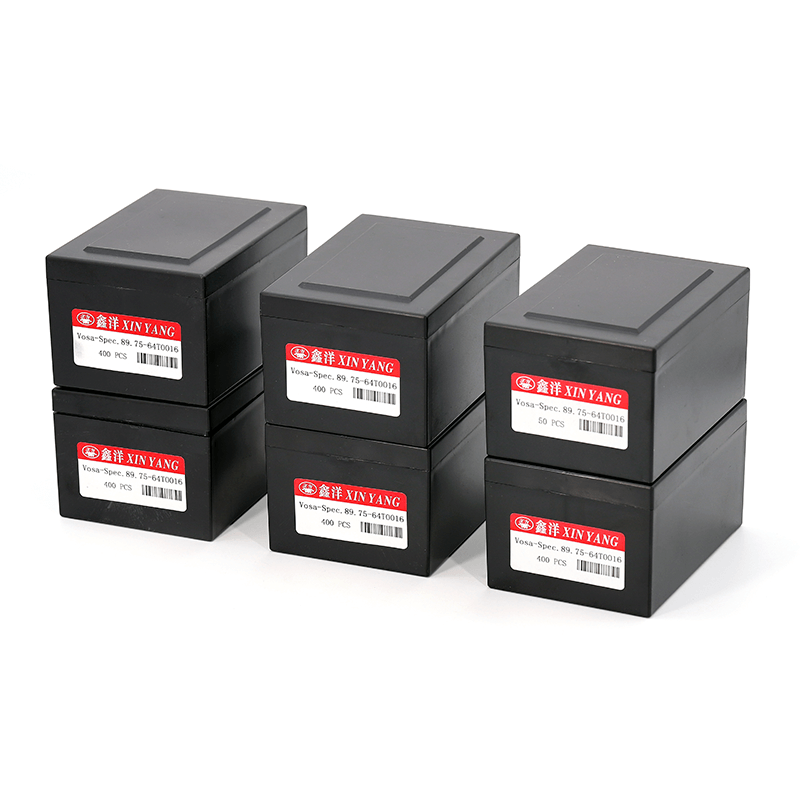
Standardized numbering systems define exact needle dimensions for industrial procurement. The 89.75 flat knitting machine needle represents a highly specific engineering profile used in modern computerized flat knitting machines. The number 89.75 denotes the overall length of the needle in millimeters. This exact length ensures the hook reaches the precise clearing height required by the machine's trick walls. Even a half-millimeter of deviation renders the needle unusable, as it will either fail to clear the old loop or smash into the opposing needle bed.
This specific needle maps to an ideal gauge range, typically handling medium to fine yarn counts. Manufacturers design the 89.75 profile with a specific butt height and angle to match the cam geometries of major V-bed carriage models. Using the exact 89.75 specification ensures the cam angles engage the butt smoothly. This reduces metal fatigue during rapid, continuous carriage traverses. It maintains consistent loop lengths across the entire fabric panel, preventing horizontal lines or tension variations in the finished garment.
Different production environments demand different structural specifications. The 80.85 knitting machine needle offers a distinct profile engineered for specific mechanical actions. Measuring 80.85 millimeters in length, its stroke length and butt placement differ significantly from the 89.75 model. The butt is positioned to accommodate the continuous, unidirectional cam track geometries found in specific circular knitting dials or specialized flat ribbing machines.
Textile mills use this specification for targeted, high-tension production tasks. It is highly standard in collar knitting operations and specific rib border configurations. The 80.85 profile provides the exact structural rigidity needed for these dense, tightly knit fabric structures. It ensures the yarn feeds smoothly under high-tension conditions without the hook bending or deflecting. The precise length allows the needle to interact perfectly with the sinkers or dial needles, ensuring clean knock-over and tight stitch formation.
Straight bar machines operate on entirely different mechanical principles than flat V-beds or circular machines. They divide into Single Needle and Double Needle configurations. These machines do not use independent cam tracks to move individual needles sequentially. Instead, they mount all needles uniformly on a single, rigid metal bar.
These machines typically utilize spring beard needles. The entire needle bar moves synchronously. Every needle rises, catches the yarn, and falls at the exact same time. This contrasts sharply with the independent, wave-like movement seen in flat knitting beds. This synchronized action is ideal for fully fashioned garment production, often referred to as Cotton's patent machines. It allows for precise widening and narrowing of the fabric panel using specialized narrowing fingers that transfer multiple edge stitches simultaneously to shape the garment pieces.
Translating fabric requirements into needle specifications prevents catastrophic production errors. You must evaluate gauge compatibility, metallurgical properties, and speed limits before installing a new batch of needles. Ignoring these dimensions leads to immediate quality control failures and machine damage.
Machine gauge defines the number of needles per inch on the needle bed. A strict mathematical relationship exists between machine gauge, needle thickness, hook size, and yarn count. Fine-gauge machines (e.g., 14G to 18G) require incredibly thin needles with small hooks to fit inside the narrow trick walls. Coarse-gauge machines (e.g., 3G to 5G) need thick, robust needles with large hooks to handle heavy, bulky yarns. You must match the yarn diameter to the hook size perfectly.
Oversized hooks cause severe yarn splitting. If you run a fine yarn through a coarse needle, the large hook pierces the yarn plies instead of grabbing the whole strand. This creates weak spots, fuzziness, and structural defects in the fabric. Conversely, undersized hooks fail to capture the yarn entirely. If you run a thick yarn through a fine needle, the hook cannot contain the fiber volume. This results in dropped stitches, massive holes in the fabric panel, and frequent machine stops. Proper compatibility ensures the hook holds the yarn securely during the downward stroke without pinching or splitting the fibers.
Industrial needles endure extreme physical punishment. They operate continuously for days, executing millions of mechanical cycles. Manufacturers forge them from high-carbon steel, such as C1095, which undergoes precise austempering processes. This heat treatment provides the necessary tensile strength to resist bending, while maintaining enough flexibility in the latch and stem to absorb shock. Specialized surface coatings enhance durability. Chrome plating reduces surface friction, allowing the needle to slide smoothly through the trick walls. Titanium nitride coatings provide extreme wear resistance, which is mandatory when knitting highly abrasive yarns like aramid fibers, metallic threads, or unrefined wool.
Heat dissipation is a critical performance metric. Continuous high-speed operation generates intense friction. The needle rubs against the trick walls, the cam tracks, and the yarn itself. Poor quality steel warps under this heat, causing the needle to bind in the slot. High-grade industrial needles dissipate heat efficiently. They maintain their structural geometry even during 24-hour continuous production cycles. This industrial metallurgy sharply contrasts with the static wood or plastic materials used in hobbyist hand-knitting.
Different needle architectures have different maximum safe operating speeds, usually measured in meters per second (m/s). Pushing a needle past its physical limit induces dynamic fatigue. Latch needles experience severe latch bounce at extreme speeds. The latch slams open and closed too violently, eventually shattering the rivet or snapping the spoon. Compound needles scale much better for high-speed production. Their short stroke and independent sliding tongues eliminate latch bounce entirely. You must align your needle architecture with your target production velocity. Running a latch needle machine at compound needle speeds guarantees massive component failure.
Identifying failure points in the production cycle saves money and prevents downtime. Proactive mitigation prevents minor mechanical issues from escalating into catastrophic machine damage.
Needles fail for specific, preventable reasons. Abrasive yarns act like sandpaper on the hook and latch, slowly grinding away the metal until the hook loses its shape. Improper cam timing forces the needle to move against mechanical resistance, bending the stem. Metal fatigue accumulates from constant vibration. The butt eventually snaps off under the pressure of the cam track.
A single broken needle creates a cascading failure. It immediately causes a vertical drop line in the fabric, ruining the entire panel. The broken metal pieces can jam the needle bed. If a sheared butt lodges in the cam track, the carriage will crash into it on the next pass. This severe collision destroys the cam box, bends the carriage rails, and requires expensive, time-consuming repairs.
Strict lubrication schedules are mandatory for industrial knitting. You must use correct viscosity oils, typically ISO VG 22 or 32 needle oil. Heavy oils attract dust, bind with cotton lint, and create a thick sludge that jams the needles. Light oils burn off too quickly under high heat. The right oil flushes lint out of the needle tricks while maintaining a microscopic friction barrier between the needle and the bed.
Routine cleaning prevents buildup. Operators must use compressed air or industrial vacuums to remove lint from the needle beds daily. Alignment checks ensure needles sit perfectly straight in their slots. Bent needles scrape the trick walls, generate excess heat, and eventually snap. Preventative maintenance extends needle life and protects the machine's cam systems.
The global market contains many counterfeit or low-grade aftermarket needles. These parts look identical to OEM components but lack proper metallurgical tempering and dimensional accuracy. They break quickly, warp under heat, and damage machines. Sourcing from unverified suppliers introduces massive production risks and unpredictable downtime.
You must vet suppliers rigorously. Demand proof of batch consistency and optical sorting processes. Request tolerance testing data for dimensional accuracy, ensuring the length and butt height match your exact specifications. Look for ISO 9001 certifications in their manufacturing process. Reliable suppliers provide consistent steel quality and exact dimensional matching for every single batch.
Selecting knitting machine needles is a strict engineering decision. It depends entirely on machine type, required fabric gauge, and target production speed. Proper selection guarantees fabric quality, maximizes production velocity, and protects expensive machinery from catastrophic cam collisions.
Use latch needles for versatile weft knitting applications. Deploy compound needles for high-speed warp knitting environments. Strictly adhere to OEM dimensional specifications when ordering replacement parts. Never attempt to force incompatible needles into a machine bed, as the resulting damage will far outweigh any perceived component savings.
Audit your current needle consumption rates to identify abnormal breakage patterns or localized wear on specific machine beds.
Cross-reference your machine manuals to verify exact dimensional specification requirements before authorizing new purchase orders.
Implement a strict, daily lubrication and lint-flushing protocol using the correct ISO viscosity oil for all operating machines.
Request metallurgical test batches and dimensional tolerance reports from certified industrial suppliers before placing bulk orders.
A: Industrial needles are complex, mechanized steel components. They feature moving parts like swinging latches or independent sliding tongues to form individual stitches automatically at high speeds. Hand-knitting needles are static rods made of wood, metal, or plastic. Knitters use them manually to hold and transfer active stitches.
A: A latch needle uses a self-closing swinging latch attached by a rivet, operating independently. A spring beard needle has a flexible hook extension that requires an external machine presser bar to physically close the hook. Latch needles knit faster and handle varied yarns, while spring beard needles produce tighter, finer loops.
A: You must check your machine's technical manual. The manual specifies the exact needle dimensions required for the carriage cam system. You can also use digital calipers to measure an existing, intact needle. The 89.75 denotes specific length and butt height tolerances required by certain V-bed flat machines.
A: No. Circular and flat machines use entirely different cam systems and bed geometries. The butt placement, overall length, and hook angles differ drastically. Inserting a circular needle into a flat bed will cause immediate cam collisions, shear the needle butts, and cause severe mechanical damage.
A: Frequent breakages stem from incorrect yarn tension, highly abrasive yarns, or worn cam systems. Lack of proper lubrication increases friction and heat, causing the steel to warp. Using the wrong needle gauge for the yarn thickness also causes the hook to stress and snap during loop formation.
A: Compound needles are primarily used in high-speed warp knitting machines and modern circular machines. They feature a main hook and an independent sliding tongue. This design allows for a very short needle stroke. It eliminates latch bounce, enabling the machine to achieve maximum possible production speeds.