English ![]()

No.7 Wolong Middle Road, Wolong Economic Park, Zhifu District, Yantai City, Shandong Province

Views: 0 Author: Site Editor Publish Time: 2026-10-02 Origin: Site
A lifeless quartz timepiece on the workbench presents a unique diagnostic challenge. Most people instinctively swap the battery. However, the root cause often lies deeper within the micro-mechanics. Is it a drained silver-oxide cell? Perhaps a corroded integrated circuit? Or maybe a completely severed micro-coil? Relying on guesswork wastes labor hours. Worse, it risks irreversible damage to fragile components.
In this technical troubleshooting guide, you will learn the exact empirical methods used by horological engineers to test micro-motors. By utilizing precision instruments and a strict process of elimination, you can confidently pinpoint faulty elements. You will also learn exactly when to stop attempting manual repairs and upgrade to reliable replacement parts.
Verify the power source first: A depleted battery perfectly mimics a dead motor. Always measure the exact voltage drop under load before opening the movement architecture.
Rely on electrical resistance: Testing the copper windings for continuity remains the most objective way to verify structural integrity.
Isolate the command signal: A specialized line release tester detects the electromagnetic pulse from the circuit board. This instantly isolates the fault to either the electronic brain or the mechanical drivetrain.
Evaluate repair viability: Severed micro-coils are rarely cost-effective to rewind. Sourcing factory-calibrated replacements is the standard engineering solution.
Adapt to hybrid technology: Modern wearables utilize high-torque bi-directional steppers, requiring updated diagnostic approaches compared to traditional analog movements.
Before applying test probes to microscopic contact pads, technicians must understand the underlying physics of a quartz movement. Traditional mechanical watches rely on the unwinding tension of a mainspring. In contrast, quartz watches utilize electrical energy and piezoelectricity to maintain strict timekeeping accuracy. The driving force behind the physical movement of the hands is a Lavet-type stepping motor.
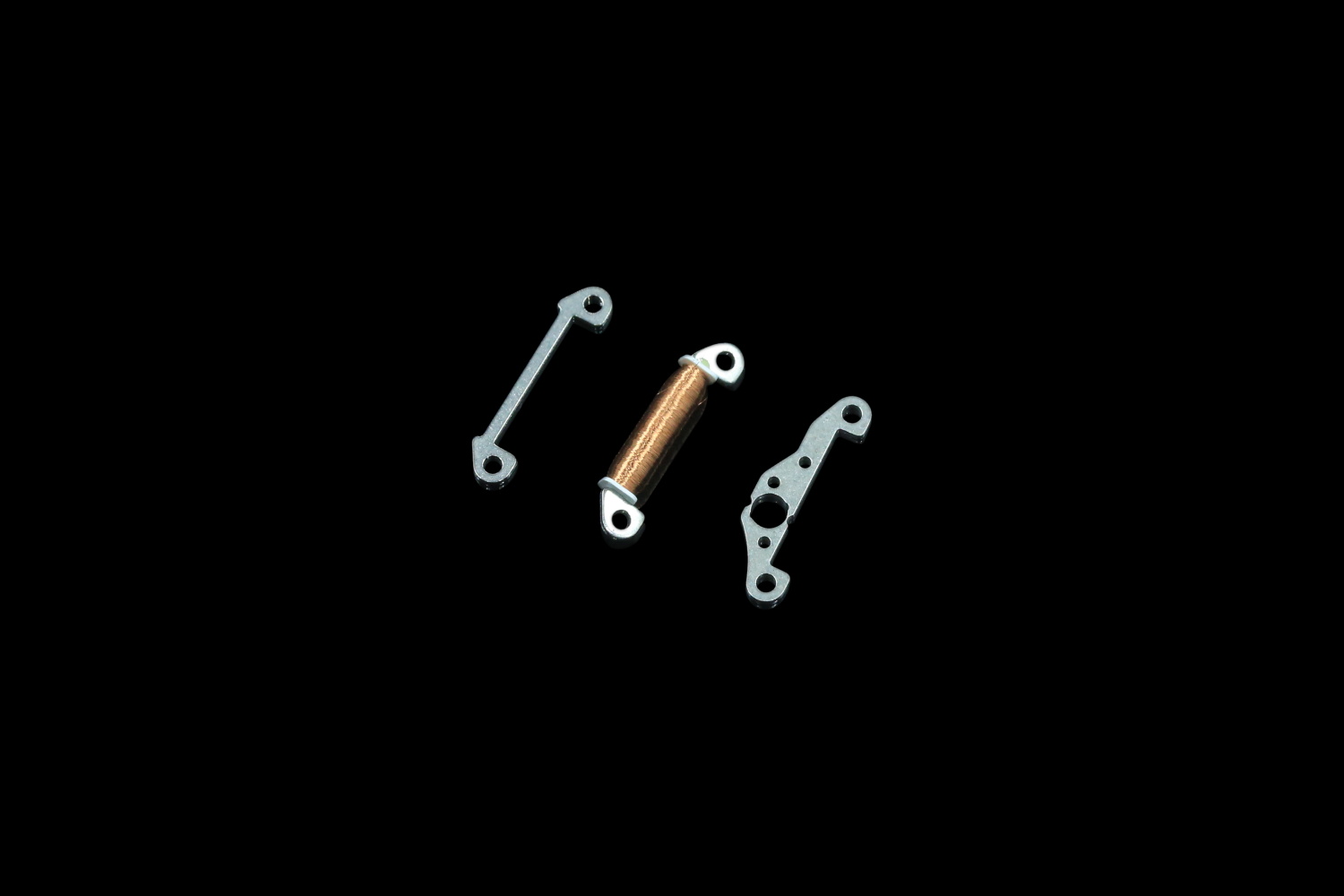
From an engineering perspective, a standard Lavet stepping motor consists of three primary elements. These include a soft iron stator, a permanent magnetic rotor, and a micro-coil wound from ultra-fine copper wire. When the battery supplies power, it sends a continuous electrical current to the quartz crystal oscillator. This tiny crystal vibrates at a highly stable frequency of 32,768 Hertz.
Subsequently, the integrated circuit mounted on the printed circuit board acts as a digital divider. It translates these rapid vibrations into exactly one electrical pulse per second. This pulse is then dispatched through the micro-coil. As the electrical current passes through the copper windings, it temporarily magnetizes the stator. This sudden magnetic field interacts with the permanent magnet of the rotor, forcing it to rotate exactly 180 degrees. This precise rotation drives the mechanical gear train, ultimately advancing the second hand.
Understanding this energy transfer is critical because failures can occur at any stage. Common failure modes include battery acid leakage that aggressively corrodes the copper coil, moisture ingress causing the iron stator to oxidize, or blunt physical shock that severs wire thinner than a human hair. Because of these inherent vulnerabilities, utilizing premium Quartz Movement Components is vital to ensuring the long-term reliability of the repaired timepiece.
Accurate troubleshooting demands precision instruments. Using automotive-grade tools or improvised probes easily leads to the destruction of delicate micro-mechanics. Below is a breakdown of the essential tools required for a safe and empirical diagnosis.
Digital Multimeter: Essential for measuring coil resistance and battery voltage. It must feature high sensitivity and ultra-fine-tipped test probes to safely access microscopic contact pads without scratching the ceramic substrate.
Quartz Pulse Tester: This device detects the electromagnetic pulse emitted by the integrated circuit. It features an acoustic or visual indicator, allowing technicians to verify electronic health without dismantling the gear train.
Anti-Magnetic Tweezers: Handling delicate stators and magnetic rotors requires extreme care. Tweezers must be strictly non-magnetic, typically crafted from brass, to prevent accidentally magnetizing the stator. A magnetized stator will instantly stall the motor.
Stereo Microscope: Necessary for inspecting the micro-coil for hairline breaks or microscopic debris. A minimum of 20x magnification is highly recommended when inspecting copper wire integrity.
Testing a quartz timepiece is a strict process of elimination. By independently isolating the power source, the electronic circuit, and the mechanical components, you can accurately pinpoint the exact point of failure.
The most frequent error in diagnostic work is assuming a motor is dead when the power source simply lacks sufficient amperage. A depleted cell causes symptoms that perfectly mirror a mechanical failure. Begin by carefully extracting the battery using brass tweezers to avoid short-circuiting the cell.
Set the digital multimeter to the direct current voltage setting. Place the positive probe on the top of the battery and the negative probe on the bottom. For a standard silver oxide battery, a healthy reading should register between 1.55 Volts and 1.60 Volts. Anything dipping below 1.45 Volts may fail to provide sufficient starting torque for the motor. If the voltage is optimal, you can definitively rule out the power supply.
Before dismantling the intricate gear train, you must verify that the integrated circuit is actually sending the command signal. This is where the quartz pulse tester becomes invaluable. Place the watch face-down on the sensor pad.
The tester detects the magnetic field generated by the electrical pulse. If the integrated circuit is functioning correctly, the machine will emit a rhythmic beep exactly once per second. Specifically, if the tester registers a steady pulse but the watch hands remain motionless, the electronics are perfectly fine. The issue is therefore isolated to a dead motor coil, a demagnetized rotor, or a physical jam in the gears. Conversely, a lack of pulse indicates a failed circuit board.
This phase is the most critical step in determining the structural health of the motor. The micro-coil is highly susceptible to breaking under the slightest pressure. Set the digital multimeter to measure Ohms, targeting the 20 kilo-ohm range.
Locate the two metallic contact pads on the circuit board that connect directly to the motor coil. Peering through a microscope, place one probe on each pad with extreme gentleness. A healthy coil typically registers a resistance between 1.5 kilo-ohms and 3.0 kilo-ohms. If the screen displays an open loop, the copper wire is broken. A reading near zero indicates a short circuit where the protective enamel insulation has melted away.
Furthermore, if the motor coil tests within normal resistance parameters and the electronic pulse is active, the failure is entirely mechanical. Inspect the gear train under high magnification. Look for a common phenomenon known as the twitching second hand.
If the second hand vibrates slightly backward and forward without advancing, the motor is actively trying to turn the rotor. However, a physical blockage is preventing rotation. Common causes include microscopic lint or synthetic oils that have degraded into a sticky residue. In this scenario, the components must be completely disassembled, cleaned in an ultrasonic bath, and re-lubricated.
Recent analyses of horological repair trends indicate a massive shift toward precision diagnostics within the industry. Rather than blindly swapping out entire movements, modern technicians are increasingly leveraging advanced multimeters and digital pulse testers to isolate faults at the component level. This trend is heavily driven by a global push toward sustainability and the desire to reduce electronic waste. Furthermore, preserving the original integrity of vintage quartz pieces has become a priority for collectors. Consequently, the ability to accurately test and replace individual micro-motor components is now an indispensable skill in the modern repair market, moving away from the wasteful throwaway culture of the early 2000s.
When empirical testing confirms that a motor coil is broken, technicians face a critical economic decision. Attempting to rewind a microscopic copper coil by hand is an engineering nightmare. The wire is incredibly fragile, and achieving the exact factory resistance specification is highly impractical. The labor time required far outweighs the procurement cost of a brand-new component.
Therefore, component replacement is the standard procedure. Selecting a high-grade Quartz Watch Motor Series ensures the replacement delivers the exact torque and electrical resistance required by the original manufacturer. Utilizing inferior aftermarket coils frequently leads to rapid battery drain or erratic stepping behavior.
To assist in component evaluation, review the core engineering differences between traditional and modern replacement motors below.
Technical Parameter | Standard Quartz Motor | Smart Watch Stepper Motor |
|---|---|---|
Operating Voltage | 1.2V to 1.7V | 3.0V to 4.2V |
Coil Resistance | 1.5 to 3.0 kilo-ohms | 150 to 400 Ohms |
Rotation Type | Uni-directional fixed steps | Bi-directional rapid stepping |
Primary Application | Analog timekeeping | Hybrid wearables and notifications |
The horological industry is currently experiencing a technological renaissance. The foundational principles of the Lavet stepping motor have paved the way for advanced micro-motor technology utilized in modern wearables.
Hybrid smartwatches maintain the classic appeal of physical hands but incorporate complex digital sensors for health tracking and Bluetooth connectivity. To achieve this seamless integration, these devices utilize miniature, high-torque stepper motors. While they operate on similar magnetic principles, they are engineered to integrate with complex pulse-width modulation algorithms.
Testing these modern motors requires an updated approach. While a multimeter is still used to check coil resistance, technicians rely heavily on proprietary software diagnostics. The engineering behind a modern Smart Watch Motor Series focuses on extreme miniaturization, rapid bi-directional rotation, and the ability to move heavier luminous hands swiftly to indicate digital notifications.
The overall longevity of any watch repair depends entirely on the quality of the replacement parts. Installing unverified components results in premature motor stalling and permanent damage to the integrated circuit due to improper electrical impedance.
It is highly recommended to source Original Equipment Manufacturer parts or premium aftermarket alternatives from certified manufacturers. Repair professionals should look for suppliers that adhere to strict ISO quality control standards. Prioritizing high-grade materials ensures the restored timepiece delivers years of reliable service.
Diagnosing a lifeless quartz watch does not have to be an exercise in frustration. By adopting a rigorous engineering approach, you can accurately identify the root cause of a stopped movement. Always verify the battery voltage under load, confirm the electronic pulse, and precisely measure the coil resistance. Remember to handle these microscopic internal parts with extreme care. When a motor coil fails the continuity test, forgo impossible manual rewinding. Instead, invest in high-quality, factory-calibrated replacement parts. For technicians and businesses looking to source reliable micro-motor components, exploring the extensive catalog at xinyang999.com provides access to industry-leading parts designed for precision and longevity.
The standard electrical resistance for a healthy quartz motor coil typically falls between 1.5 kilo-ohms and 3.0 kilo-ohms. However, this specification varies depending on the movement caliber and physical size. High-torque motors designed to drive heavy chronographs may feature lower resistance to allow more current flow. Always consult the manufacturer's technical data sheet for exact specifications.
While a multimeter is the only instrument capable of measuring internal coil health, you can perform partial testing using a quartz pulse tester. This device detects the electromagnetic pulse emitted by the integrated circuit. If the tester beeps every second, the battery and circuit board are functioning correctly. If the watch still fails to run, the issue is definitively mechanical. However, without a multimeter, you cannot verify if the coil wire is physically broken.
A twitching second hand is a classic diagnostic indicator. This behavior confirms the battery has adequate voltage, the integrated circuit is sending a pulse, and the motor coil is generating a magnetic field. The issue is mechanical resistance preventing the rotor from completing its cycle. This is typically caused by dried-out synthetic lubricants, microscopic debris jamming the wheel teeth, or a damaged rotor pinion.
Generally, no. While the foundational physics are identical, the engineering applications differ vastly. Components from modern hybrid wearables are highly specialized bi-directional stepper motors. They operate on different digital signals, require significantly higher torque, and draw power from high-capacity lithium-ion batteries rather than standard silver-oxide cells. Their physical footprints and mounting points are entirely proprietary.
For standard consumer quartz watches, replacing the entire movement is significantly cheaper and faster. The cost of a basic replacement movement is lower than the hourly labor rate required to isolate and install a new micro-coil. In contrast, for high-end luxury quartz watches featuring thermocompensated or historically significant calibers, replacing individual components is the mandatory engineering standard to preserve the timepiece's value.
Testing a quartz crystal oscillator requires specialized equipment, typically a quartz timer or an oscilloscope. These instruments measure the exact frequency output of the crystal. A healthy standard quartz crystal must vibrate precisely at 32,768 Hertz. If the frequency is erratic or completely absent despite a healthy power supply, the crystal has failed and the entire circuit board usually requires replacement.
If a fresh, high-quality battery is installed but the watch loses time, the motor is likely struggling against high mechanical friction. Degraded oils or microscopic dirt force the motor to miss steps. Additionally, a weakened magnetic rotor or a stator that has been slightly magnetized by improper tools can reduce stepping efficiency. This results in the gear train failing to advance consistently with every electrical pulse.