English ![]()

No.7 Wolong Middle Road, Wolong Economic Park, Zhifu District, Yantai City, Shandong Province

Views: 0 Author: Site Editor Publish Time: 2026-10-09 Origin: Site
Modern textile manufacturing operates on a razor's edge. We constantly balance the demand for blistering production speeds against the uncompromising need for flawless fabric precision. Every hour a loom sits idle for emergency maintenance directly erodes profit margins. Machinery reliability is the ultimate currency on the factory floor.
At the very core of this high-stakes environment is the electronic Jacquard machine. This sophisticated system acts as the brain of the loom, translating complex digital patterns into the physical lifting of warp threads. Historically, the internal modules executing these commands relied on sliding mechanisms. These older designs functioned for decades but were inherently plagued by friction-induced wear, particularly during extended high-speed production cycles.
This persistent engineering bottleneck drove the development of the bearing-equipped module. By fundamentally altering the internal physics—transitioning from sliding friction to rolling friction—this component represents a paradigm shift in loom technology. This comprehensive guide will dissect the mechanical principles behind this innovation, explore specific structural variations, and provide actionable criteria to help procurement teams optimize their weaving operations.
Friction Eradication: Integrating a precision micro-bearing shifts the mechanical load to rolling friction, drastically reducing thermal wear on internal plastic and metal components.
Tailored Engineering Solutions: Specialized variations meet distinct operational conditions, ranging from acoustic control models for quiet environments to reinforced units for high-tension industrial weaving.
Advanced Electronic Synchronization: Modern iterations seamlessly bridge heavy-duty mechanical durability with rapid electronic pattern control, ensuring zero lag between digital signals and physical thread lifts.
Long-Term Cost-Efficiency: Upgrading significantly lowers long-term maintenance expenses by preventing unexpected loom downtime and reducing energy consumption.
To fully grasp the value of this structural upgrade, one must first understand the baseline function of a standard shedding mechanism. In an electronic Jacquard loom, the module serves as the primary electromagnetic actuator. When the central computer processes a digital pattern file, it fires electrical impulses to these units. The modules then utilize electromagnets to engage or disengage specific lifting hooks. These hooks interact with moving knives to raise the warp threads, creating the precise shed opening through which the weft yarn is inserted.
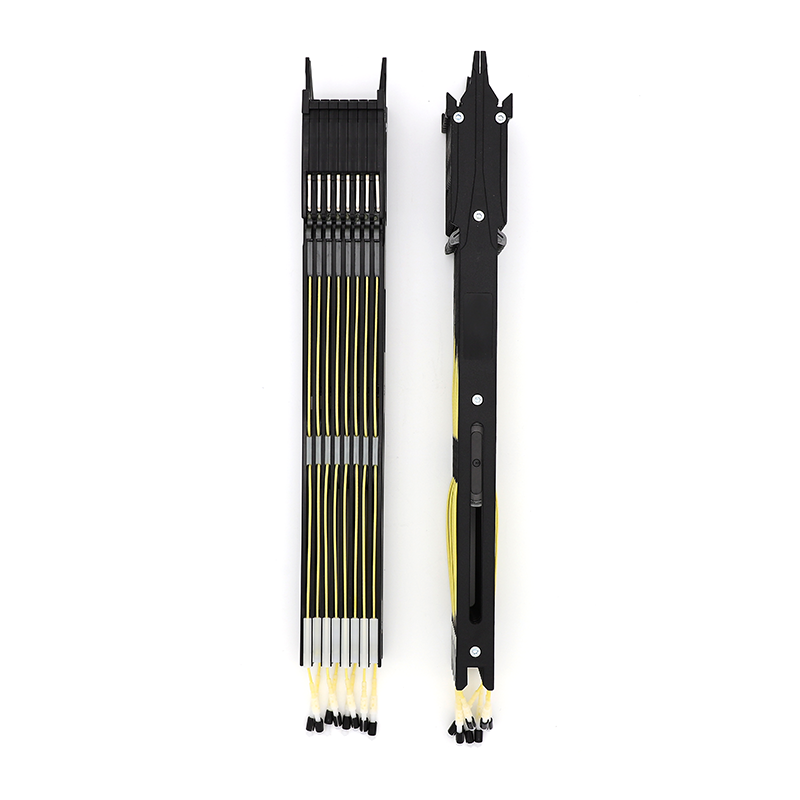
The defining characteristic of an advanced M5 Jacquard Module equipped with a bearing is its internal pivot architecture. In legacy designs, the internal harness cords or pulleys slide directly against stationary plastic channels. Picture a bustling factory floor running at 600 picks per minute. The sheer kinetic energy generated by thousands of cords scraping against plastic creates immense localized heat. Technicians often discover older units caked in micro-plastics and frayed fibers. This is a telltale sign of sliding friction degradation that eventually leads to snapped cords and defective fabric.
Engineers have effectively rewritten this mechanical equation by embedding a micro-bearing at the primary pivot point. The internal cord now rolls effortlessly over the bearing, absorbing the rotational force rather than fighting against it. For maintenance engineers operating at the bottom of the procurement funnel, this distinction is paramount. Transitioning to this technology yields empirical improvements in equipment longevity and drastically extends the intervals between scheduled overhauls.
The operation of this component is a masterclass in electromechanical synchronization. This sequence occurs in mere milliseconds and repeats thousands of times per hour without margin for error.
Step 1: Electronic Signal Reception
The cycle initiates at the loom's central processing unit. The pattern software converts the fabric design into binary data, dispatching a targeted low-voltage DC pulse to the specific module. To prevent data packet loss during rapid operation, the internal circuitry requires highly conductive wiring and absolute voltage stability.
Step 2: Magnetic Activation and Hook Selection
Upon receiving the current, the internal solenoid energizes to generate a localized magnetic flux. This magnetic field acts upon a flexible metallic retaining hook. Depending on the machine's specific logic, the magnet will either pull the hook out of the way or release it to catch the ascending lifting knife. This binary catch-or-miss action dictates the exact weave structure.
Step 3: The Role of the Bearing in Lifting
Once the hook engages with the upward-moving knife, immense mechanical tension transfers instantly to the internal cord system. In a bearing-equipped unit, this is where the magic happens. Instead of dragging against a static housing, the cord glides over the freely spinning micro-bearing. The bearing distributes the extreme radial load evenly, preventing the mechanism from binding or stuttering under the sheer weight of the warp tension.
Step 4: Warp Thread Movement
Consequently, this frictionless internal rotation translates into a perfectly fluid external lift. The harness cord attached to the heald wire raises the warp thread steadily to the exact required height. Because the bearing eliminates micro-stutters, the resulting fabric shed is clean, unobstructed, and uniform. This allows the rapier or air-jet insertion mechanism to pass through flawlessly.
Textile manufacturing is a highly diversified industry. The mechanical prerequisites for weaving delicate silk scarves contrast sharply with those required for heavy-duty automotive airbags. Engineers have developed highly specialized iterations of the core bearing technology to address these distinct environmental and mechanical demands.
Industrial weaving facilities are notoriously loud. They often push the limits of occupational safety regulations due to the relentless clacking of Jacquard hooks engaging with steel knives. The Low-Noise M5 1 Module With Bearing is explicitly engineered to combat acoustic pollution without compromising cycle speeds.
Specifically, this variant integrates advanced acoustic dampening polymers within the impact zones of the housing. The internal micro-bearings are machined to ultra-precise tolerances, ensuring that rotational movement produces virtually zero vibration. By buffering the kinetic shock during hook reset, this model significantly drops the ambient decibel output on the factory floor. From an application standpoint, it is the premier choice for high-speed environments focused on lightweight delicate fabrics like fine cotton and synthetic blends. In these scenarios, warp tension is low enough to prioritize noise reduction.
When a factory transitions to weaving dense heavy textiles, standard units frequently suffer catastrophic structural failures. The sheer downward pull of thick warp yarns can warp plastic housings or cause standard bearings to seize. To prevent this, the Heavy-Load M5 2 Module With Bearing is constructed for maximum mechanical endurance.
This heavy-duty iteration features a reinforced composite or alloy housing designed to resist thermal and physical deformation. Furthermore, it utilizes oversized high-carbon steel bearings capable of withstanding extreme dynamic loads. The electromagnet is also recalibrated to maintain an ironclad grip on the hooks even amid intense loom vibration. This makes it the non-negotiable standard for manufacturing industrial canvas, carpets, and heavy denim.
As Jacquard head architectures evolve, they become increasingly compact to accommodate higher hook densities. The M5-3 Electronic Jacquard Module With Bearing bridges the proven mechanical reliability of the bearing system with the spatial constraints of newer M6 structure type machines.
The M6 designation generally refers to an optimized physical footprint and a highly advanced magnetic circuit design. This allows the module to be installed in densely packed modern Jacquard heads without the risk of overheating. Despite its slimmer profile, it retains the frictionless lifting capabilities of its predecessors. It is ideal for highly complex multi-layered fabric designs that demand rapid flawless signal translation.
Module Type | Primary Feature | Bearing Material | Ideal Application |
|---|---|---|---|
M5-1 (Low-Noise) | Acoustic Dampening Polymers | Precision Micro-Alloy | Fine Cotton, Silk, High-Speed Apparel |
M5-2 (Heavy-Load) | Reinforced Housing & High Tension | Oversized High-Carbon Steel | Denim, Carpets, Industrial Canvas |
M5-3 (M6 Structure) | Compact Footprint & High Density | Standard Micro-Alloy | Multi-layered Damask, Complex Patterns |
Taking a broader look at the global textile machinery market, there is a pronounced industry-wide pivot toward sustainability and energy optimization. Recent engineering analyses highlight a critical shift. As electricity costs soar and environmental regulations tighten, facility managers are aggressively auditing their operations to reduce power consumption. In this context, the transition away from legacy sliding-friction modules is not merely a maintenance preference. It is a strategic necessity.
Modern weaving facilities are increasingly prioritizing Overall Equipment Effectiveness and data-driven maintenance. Friction is the absolute enemy of efficiency. In a Jacquard machine housing up to 10,000 individual modules, the cumulative mechanical drag from sliding friction forces the loom's main drive motor to consume significantly more kilowatts. By adopting micro-bearing technologies, factories actively lower their carbon footprint through reduced motor torque requirements. This aligns perfectly with Industry 4.0 automation and sustainability goals.
Evaluating machinery components strictly by their initial unit price is a common procurement pitfall. The true value of upgrading to bearing-equipped models reveals itself through measurable financial and operational metrics over a standard depreciation cycle.
Exponential Lifespan Increase: Rolling friction effectively eliminates the abrasive wear that destroys standard plastic housings. Bearing-equipped units easily outlast their traditional counterparts by millions of cycles. This drastically shrinks the annual budget required for spare parts and emergency replacements.
Measurable Energy Efficiency: Lowering the mechanical resistance within the Jacquard head directly reduces the amperage drawn by the main motor. Over a fiscal year running dozens of looms continuously, this reduction in electrical load translates to massive utility savings.
Superior Fabric Yield: A worn-out module leads to jerky delayed hook lifts, commonly known as missed hooks. When a thread fails to lift, it creates a visible structural defect in the weave, forcing the factory to downgrade or scrap the fabric roll. The fluid consistency provided by the bearing ensures perfect shed formation. It practically eliminates mechanical misfires and maximizes the yield of premium-grade textiles.
The versatility of these advanced shedding mechanisms makes them foundational across various specialized textile sectors. The specific choice of module directly dictates the efficiency of the production line.
High-End Apparel and Fashion: The ultra-fast response time of the module is critical for the rapid weaving of intricate multi-colored patterns. Smooth shed formation ensures that delicate silk or fine wool yarns are not subjected to abrasive tension.
Home Textiles: Producing expansive runs of curtains, bed linens, and terry towels demands relentless reliability. The bearing mechanism guarantees that the loom can maintain high output rates for weeks on end without stopping for module swaps.
Technical and Industrial Textiles: The manufacturing of automotive airbags, ballistic nylon, and fiberglass filtration materials involves punishing warp tension. These applications strictly mandate heavy-load variations to prevent catastrophic mechanical failure during production.
Even the most meticulously engineered components require proper handling to achieve their theoretical lifespan. Factory technicians must adhere strictly to established protocols when managing electronic Jacquard components.
Installation Protocols: When executing a factory-wide module swap, technicians must be hyper-aware of electrostatic discharge. The internal circuit boards are highly sensitive to static electricity. Wearing grounding straps is mandatory. When seating the new unit into the Jacquard head, operators must ensure perfect alignment of the contact pins to avoid bending them or causing electrical shorts.
Preventative Maintenance: Enclosed micro-bearings require vastly less lubrication than exposed mechanical gears, but they are not entirely maintenance-free. Textile factories generate immense volumes of airborne lint. Regular scheduled air-purging of the Jacquard head is vital to prevent this lint from accumulating around the bearing housing. Left unchecked, lint will eventually choke the rolling mechanism. Technicians should also routinely inspect the electrical contacts for oxidation or vibration-induced loosening.
Procuring the correct module demands a methodical assessment of your facility's unique production parameters. Purchasing an incompatible variation leads to premature failure and wasted capital expenditure. Use these hard engineering criteria for your next upgrade.
Calculate Peak Warp Tension: The primary deciding metric must be dynamic warp tension. If your facility weaves lightweight apparel, prioritizing speed and acoustic control with a low-noise model is the most cost-effective route. Conversely, weaving heavy canvas with standard modules will lead to rapid bearing seizure. Investing in a heavy-load model is absolutely essential for industrial textiles.
Verify Electronic and Structural Compatibility: Not all electronic Jacquard heads share the same internal architecture. Before issuing a purchase order, cross-reference the physical dimensions, pin configurations, and voltage stability requirements of your existing machines. Pay special attention to whether your equipment utilizes a standard layout or a compact M6 structural footprint.
Demand Rigorous Quality Control Data: The operational success of the module hinges entirely on the machining precision of the micro-bearing. When vetting suppliers, demand documentation regarding their static friction coefficient testing, cycle-life endurance limits, and electromagnetic response times. A reputable supplier provides clear warranty terms and possesses the logistical capacity to fulfill large-scale factory upgrades seamlessly.
The transition from traditional sliding mechanisms to bearing-equipped modules is no longer just a luxury upgrade. It is a fundamental engineering requirement for remaining competitive in modern textile manufacturing. By eradicating internal friction, these components allow looms to run faster, quieter, and with unprecedented precision.
Whether your facility requires the acoustic dampening of the M5-1, the brute strength of the M5-2, or the compact electronic agility of the M5-3, there is a tailored solution engineered for your specific production line. Factory managers are strongly encouraged to audit their current machinery failure rates and calculate the long-term ROI of upgrading. To explore the exact specifications required for your looms and secure the most reliable components on the market, visit XinYang999. Investing in frictionless technology today is the most definitive way to safeguard fabric quality and ensure uninterrupted profitability tomorrow.
The primary distinction lies in friction management. The inclusion of a micro-bearing replaces abrasive sliding friction with smooth rolling friction. This drastically reduces wear on internal cords and plastic housings, exponentially increasing the component's operational lifespan.
While physically possible, it is not recommended from an engineering cost-efficiency standpoint. The heavy-load variant is over-engineered for lightweight fabrics. It is best reserved strictly for high-tension applications like denim or industrial textiles to maximize your return on investment.
This specific model utilizes precision-machined micro-bearings and integrates specialized shock-absorbing polymers within the housing. These elements work in tandem to muffle the kinetic clacking sound generated when the metal hooks rapidly engage and disengage with the lifting knives.
The M6 designation refers to a highly optimized and compact physical footprint combined with an advanced magnetic circuit design. It allows the module to fit into newer densely packed Jacquard heads without overheating while still leveraging the reliable frictionless bearing mechanism.
By replacing sliding friction with rolling friction, the bearing significantly reduces the mechanical drag within the Jacquard head. This lower resistance means the main drive motor requires less torque to operate, leading to a measurable drop in kilowatt-hour consumption over long production cycles.
Frontline technicians should look for missed hooks resulting in fabric defects, unusual localized heat generation on the module housing, or inconsistent electromagnetic response times. If routine air-purging reveals excessive plastic dust or the bearing feels gritty during manual inspection, immediate replacement is required.
They are widely compatible with many major electronic Jacquard formats, but they are not universally interchangeable. It is absolutely crucial to verify the specific pin configuration, housing dimensions, and operating voltage with your machinery supplier prior to bulk procurement.